The Brattle Theatre
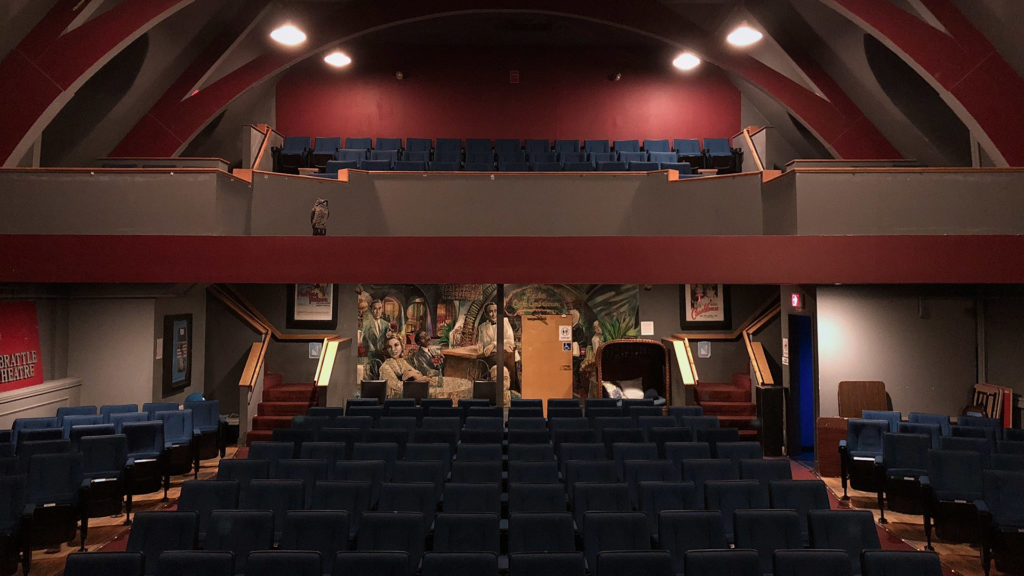
Cambridge, more specifically Harvard Square, became my new favorite spot in the city this past semester. Even though I would have said Newbury Street, the Esplanade, or the North End were my favorite places last fall, spring changed that in an unexpected way. Nevertheless, Harvard Square has a fundamental difference from all of these places. There is a specific quality that none of them have, but that Harvard Square offers. It is not something physical that can be seen with bare eyes; however, it is still very clear to a trained eye. It is almost something metaphysical, a quality that becomes even more dramatic when compared with Allston, where I have been residing for the past two years.
Harvard Square became a special place for me in an unexpected, unnamable way. During this process, it refueled the hope and enjoyment I once had in Boston, which had died after the first semester of my freshman year almost three years ago. This journal entry is my attempt to pursue this unnamable quality of Harvard Square, and to do this I will investigate one specific building that distills the special characteristics of the square.
The Brattle Theatre is a movie theater on Brattle Street in Cambridge. It consists of two floors and has a capacity of about 225 guests. It is one of the few remaining theaters that still uses a rear projection system. The Brattle screens two of “the best in classic, cutting-edge, foreign, and art-house” movies every day during the week, usually one at 4:30 PM and another at 7:30 PM. On weekends, it goes up to four movies per day, with screenings starting as early as 12 PM. Tickets are always a flat-rate $15, or $13 with the student discount. There are no assigned seats, and guests are free to pick any empty seat. It is never too full or too empty, unless a David Lynch movie is playing. In that case, tickets will likely sell out a day in advance. Their policy states that no outside food or drinks are permitted; however, I have witnessed people walking in with iced lattes without any issues. Popcorn and various other snacks and beverages are sold in the theater, although the bar closes 20 minutes after the start of the final screening of the day. A pint of beer costs about $8, comparable to the bars in the neighborhood.
The gala opening of the Brattle Hall building occurred in 1890. The hall hosted local drama groups, lectures, a ballet school, and more. Over the following sixty years, Brattle Hall came to be known as a “progressive” institution because it supported controversial productions and challenged the social norms of its time. However, the modern-day Brattle was founded by two Harvard College graduates in February 1953. The founders, Bryant Haliday and Cyrus Harvey Jr., later founded Janus Films, which became known for importing internationally produced art-house movies that are now considered classics. In 2001, the non-profit Brattle Film Foundation took over the theater and has operated it ever since.
I do not remember the first movie I watched in a cinema. I have vague memories of my parents taking me to movies, however. I also do not remember the last time I went to the cinema with them. Ever since Netflix was invented, I feel like one of us was always busy making popcorn or coffee while the movie played on the TV. In the era of unattended, half-watched, and slept-through movies, the Brattle offered me Ingmar Bergman’s 1967 black-and-white Persona on 35mm film with a rear projection system.
No one paused the movie, no one went into the kitchen to microwave food, and no one spoke during the screening. The atmosphere itself reminded me to keep my phone in my pocket and keep my mouth shut. After the movie, my friend and I got a slice from Joe’s Pizza and walked to our favorite bar.
There was something deeply refreshing about how simple everything felt. Cheap movie tickets, fairly priced beer and popcorn at the theater, no gigantic IMAX screen that makes my neck hurt, and absolutely no thirty-minute sequence of advertisements begging me to consume another hype-driven movie before the screening even starts. Afterward, getting a good slice of pizza without having to navigate a dozen new Domino’s promotions designed by a marketing department trying to reinvent fast food every six months. Then ending the night at a bar where you know the bartenders, where the music is loud enough to exist but quiet enough to think, and where the lighting does not make the entire room feel like a nightclub trying to sell an image.
For the first time in a long time, I felt like I was doing things again instead of merely consuming them. I felt like I was participating in the world rather than being harvested by it. The Brattle, Joe’s Pizza, and the small businesses surrounding Harvard Square all seemed to possess a clear sense of identity. They knew what they were there for. The Brattle exists for movies. Joe’s exists for pizza. Leavitt & Peirce exists for tobacco. None of them are trying to become lifestyle brands, social media content factories, or endlessly optimized experiences.
I think this is the unnamable quality that Harvard Square possesses. It has history, character, and cultural confidence. The square feels shaped by decades of people caring deeply about specific things instead of trying to maximize attention at all costs. Compared to this, places like Newbury Street, the Esplanade, and the North End began to feel strangely hollow to me. They are beautiful places, but they often feel consumed by tourism, aesthetics, and performance. Allston, where I have spent the past two years living, feels even further removed from this atmosphere. It is difficult to think of a single place there with the same cultural gravity or clarity of purpose.
What Harvard Square gave me during the spring semester was not simply entertainment or beauty, but the feeling that meaningful public life still exists. The Brattle Theatre became the clearest symbol of this realization. In an era of distraction, algorithms, advertisements, and endless consumption, it reminded me what it feels like to pay attention again.